 william
 Ever After Music is a three-day electronic dance music festival held annually in Kitchener, Ontario that transforms a 125-acre outdoor venue into one of Canada’s most immersive bass and house music experiences. What sets it apart from the dozens of other EDM festivals competing for your summer budget is its tightly-curated lineup focusing on underground and mainstream electronic acts, combined with elaborate stage production that rivals festivals triple its size. If you’re trying to decide whether Ever After deserves a spot on your festival calendar, the honest answer depends on what you value most: this is a camping-friendly, production-heavy event with a younger crowd and a strong emphasis on community vibes over celebrity headliners.
I’ve watched Ever After grow from a scrappy upstart into a proper destination festival over the past several years, and what keeps me coming back isn’t just the music. The festival has carved out a specific identity in the Canadian festival circuit by committing hard to electronic subgenres that bigger festivals often relegate to daytime slots. You’ll find drum and bass, dubstep, techno, and house music spread across multiple stages, each with its own personality and crowd energy.
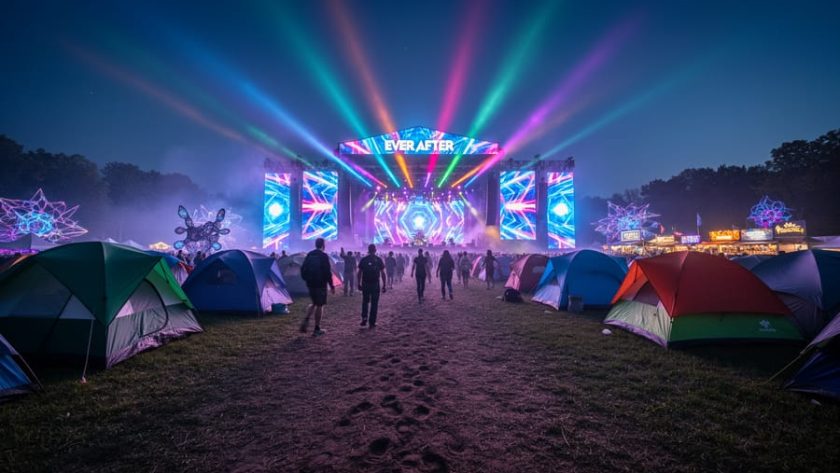
The real magic happens when production design meets the natural landscape of Bingemans campground. Walking between stages after dark, you’ll encounter art installations, roaming performers, and those spontaneous 3 a.m. moments that turn a good festival into a story you’ll retell for years. The camping element adds a layer of adventure that day-pass festivals simply can’t replicate.
What Makes Ever After Music Different
The Electronic Music Focus
Ever After isn’t trying to be everything to everyone, and that’s exactly why it works. This is a festival built for electronic music lovers, full stop. You won’t find rock acts sandwiched between DJ sets or indie bands filling afternoon slots. The lineup leans hard into bass music, dubstep, house, and techno, with a particular strength in the heavier end of the spectrum that gets the rail riders absolutely feral.
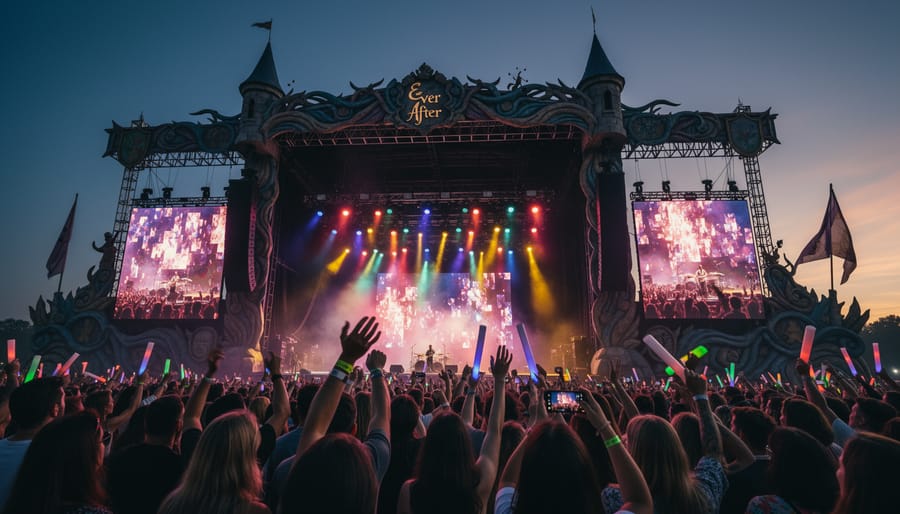
This focus transforms everything about the experience. Stage designs are built specifically for electronic production, massive LED walls, intricate lighting rigs, and sound systems tuned for the sub-bass frequencies that turn your chest into a kick drum. The visual production responds to electronic music’s structure in ways you just don’t see at multi-genre festivals. When the drop hits, the entire stage erupts in synchronized chaos because the production team knows exactly what’s coming.
The crowd reflects this specialization too. People show up ready for 12-hour dance marathons, not casual listening sessions. You’ll spot festival veterans in full rave gear alongside newer fans discovering the scene, but everyone shares that baseline understanding of electronic music culture. The energy stays consistently high because attendees came specifically for this sound, not because some electronic acts happened to be on a mixed bill.
This singular vision means Ever After can go deeper into subgenres and book artists who might struggle to fill a slot at broader festivals. It’s refreshingly unapologetic about what it is.
Community Over Commerce
What keeps me coming back to Ever After isn’t just the lineup, it’s walking through those gates and instantly feeling like I’m reuniting with 20,000 friends I haven’t seen in a year. The organizers could easily chase bigger headliners and corporate sponsorships, but they’ve deliberately kept the focus on fostering genuine connections over maximizing profits.
You’ll notice this immediately in how vendors interact with you, how staff actually seem happy to be there, and how the festival actively encourages traditions like trading kandi bracelets and organizing meet-ups for solo attendees. There’s no VIP section creating a barrier between festival-goers, which sounds small but completely changes the energy. The Facebook groups blow up year-round with people organizing carpools, sharing camping spots, and planning costume themes together.
Ever After caps ticket sales well below what the grounds could technically hold, sacrificing revenue for breathable space and that intimate vibe where you run into the same smiling faces multiple times throughout the weekend. That choice matters more than any headliner.
Your First Ever After: What to Actually Expect
The Venue Vibe and Layout
The festival sprawls across Bingemans Event Grounds in Kitchener, and the layout feels deliberately designed to keep you moving between musical worlds. Three main stages anchor the experience, the massive Main Stage dominates the central field with its towering LED screens and production that rivals any major festival. The Bass Stage sits off to the left, smaller but punching way above its weight in sound system quality. Then there’s the Trance Arena tucked toward the back, often a tent setup that creates an intimate cave-like atmosphere despite hosting thousands.
Walking between stages takes maybe five to eight minutes at a normal pace, but here’s what catches first-timers off guard: the routes get congested during set changeovers when everyone moves at once. Smart move? Leave three to five minutes before a set ends if you’re heading to a must-see at another stage. You’ll miss the finale but catch the opener you actually came for.
The festival grounds form roughly a triangle, with food vendors and merch clustered along the perimeter. Bathrooms concentrate near the main entrance and between the Main Stage and Bass Stage, plan your route accordingly because those lines get brutal between 9 and 11 PM. A quick lap around the entire festival takes fifteen minutes without stopping, which I recommend doing early on day one to mentally map everything before the crowds hit.
Crowd Energy and Festival Culture

The crowd at Ever After skews younger and intensely passionate about electronic music, these aren’t casual concert-goers, they’re people who’ve been counting down to this weekend for months. You’ll notice the PLUR (Peace, Love, Unity, Respect) ethos is alive here, though not performatively so. Trading kandi bracelets happens organically, strangers genuinely ask if you’re okay when you look lost, and festival crews adopt solo attendees without hesitation.
The energy shifts dramatically by stage and time. Main stage draws the biggest crowds and most intense mosh-like surges during heavy bass drops. Smaller stages foster tighter communities where you’ll see the same faces all weekend, often becoming temporary festival family. By 2am Saturday, everyone’s inhibitions have dissolved, you’ll witness spontaneous dance circles, impromptu conga lines through the crowd, and groups belting out lyrics together like old friends.
Solo attendees thrive here. Just compliment someone’s outfit or totem, and you’ve started a conversation. The community genuinely wants you to have an amazing time, whether that means sharing their spot near the rail or inviting you back to their campsite. The vibe stays welcoming even when packed shoulder-to-shoulder.
Day-to-Night Transformation
The festival’s energy shift from afternoon to evening is one of Ever After’s defining features. You’ll notice it around sunset, the casual festival vibes gradually intensify as headliners approach. Stage production kicks into overdrive with lasers cutting through darkness, bass frequencies feel heavier, and the crowd’s commitment level rises noticeably. By midnight, you’re in a completely different festival than the one you entered at 2 PM. Dress in layers because Ontario summer nights cool down fast, but you’ll likely shed them once you’re deep in the crowd. If you’re still going strong past headliner sets, knowing what to do after dark becomes essential, official and unofficial after-parties keep the music alive until sunrise for those with stamina.
Insider Tips for Making the Most of It
Set Scheduling Strategy
Set conflicts at Ever After are inevitable, accept this now and you’ll save yourself a lot of Sunday morning regret. When the lineup drops, screenshot your must-sees immediately, then build your schedule in tiers: non-negotiables, strong maybes, and happy accidents. I’ve learned the hard way that trying to catch every artist’s full set means spending half your weekend sprinting between stages, missing transitions, and generally stressing yourself out.
The partial-set strategy works better than you’d think. Catch the first thirty minutes of an artist you’re curious about, then duck out before the crowd surge to position yourself for your priority act. Most DJs front-load their energy anyway, and you’ll get a genuine taste of their sound without committing to the full hour. This approach also forces you to explore beyond your Spotify bubble, some of my best Ever After discoveries happened because I showed up early to claim space and got hooked by whoever was warming up.
Don’t sleep on the smaller stages during peak conflicts. While everyone packs the main stage for the headliner, the secondary stages often host incredible talent with actual room to move. Build after-mainstage plans too, because the official schedule is just the beginning of what’s happening around Kitchener-Waterloo that weekend.
The Stuff Nobody Mentions
The bathroom situation gets real around 10 PM when lines stretch forever. Hit them during set changeovers, not mid-set when everyone else has the same idea. The portable units near the main stage are chaos, walk two minutes to the back campground facilities for half the wait.
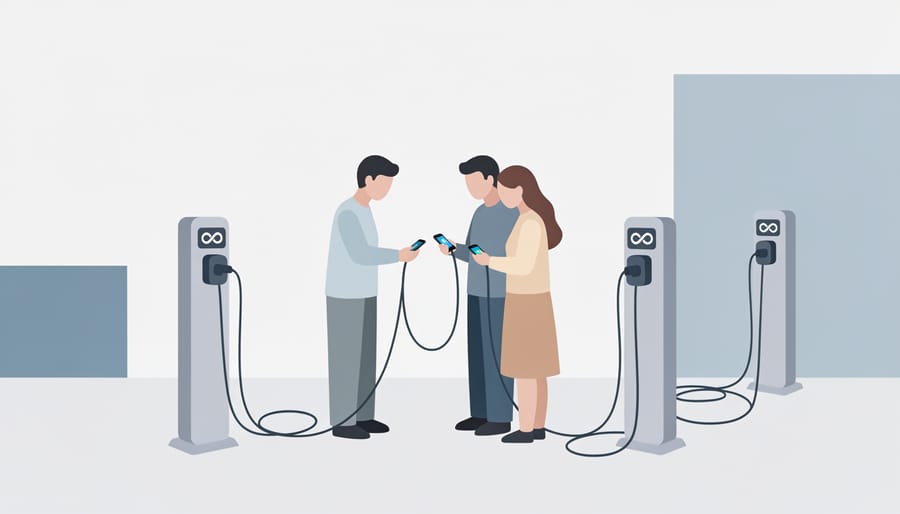
Your phone will die. Accept it. There are charging stations, but you’ll sacrifice 30-45 minutes of festival time standing guard over your device. Bring a portable battery pack and keep it in a locker if you grabbed one early (they sell out fast). Screenshot your schedule and emergency contact info before you arrive.
Re-entry depends on your wristband type. GA gets you in once per day. VIP can leave and return, but security checks get thorough after dark. If you’re running to your car, budget 20 minutes each way including the walk and line.
The ATMs run out of cash by Saturday afternoon. Bring enough for the weekend or hit one in town before you arrive. Most vendors take card now, but connection issues happen when everyone’s trying to pay at once.
Water refill stations exist, but they’re not marked on the map. Ask staff wearing orange vests, they actually know where everything is.
Best Spots for Different Experiences
Everyone wants different things from a set, and positioning yourself strategically makes a huge difference. For raw energy and artist connection, the front rail delivers, you’ll feel every bass drop in your chest and catch direct eye contact during those peak moments. But honestly? The sweet spot for sound quality sits about 30-40 feet back from the main speakers, slightly off-center. That’s where the audio engineers balance everything, and you’ll actually hear the full production instead of just bone-rattling bass.
Want dancing room without feeling crushed? Post up mid-back or on the edges where the crowd naturally thins. You’ll have space to move freely, can still see the stage clearly, and slip out easily if you need to catch another set or explore what’s happening at music festival after parties around the grounds. Pro move: scope out the right side of each stage, it’s usually less packed than the left for some reason.
Packing for Ever After Success
I learned my packing strategy the hard way at my first Ever After, by watching my phone die at 6 PM on day one while missing three artist sets because I forgot a portable charger. Don’t be me.
Start with the obvious but crucial: comfortable, broken-in shoes. You’ll walk miles between stages, and those fresh sneakers will destroy your feet by Saturday morning. I rotate between two pairs throughout the weekend to give each a break. June in Ontario means unpredictable weather, so pack layers you can tie around your waist, lightweight rain jacket, hoodie for chilly nights, and breathable clothes for when the sun’s beating down at 2 PM.
Here’s what actually saves your weekend: a quality portable charger (minimum 10,000mAh), earplugs specifically designed for music (you want to hear the bass, just at safer levels), a small backpack or hydration pack, refillable water bottle, and basic first aid supplies. Throw in sunscreen, wet wipes, and lip balm, you’ll use all three constantly.
The items I never skip anymore: a bandana (dust control, sweat management, instant fashion), gum or mints, external battery for your crew’s phones, and a portable phone fan for those brutal midday sets. Cash for vendors who don’t take cards. A spare shirt for when you’re soaked through by evening.
What you don’t need: expensive festival outfits that restrict movement, your entire makeup collection, anything you’d be devastated to lose, or stuff you plan to keep the party going with at after-parties instead of schlepping around all day.
Test your bag’s weight before you leave. If it feels heavy at home, it’ll feel unbearable by hour three. Pack smart, pack light, and you’ll actually enjoy dancing instead of managing your stuff.
Staying Safe While Going Hard
Let’s talk about keeping yourself and your friends safe while having the time of your lives, because three days of bass-heavy sets requires some real preparation.
First things first: hydration is not optional. The combination of dancing for hours, outdoor heat (even Ontario summers can surprise you), and whatever else you’re doing means you need to drink water to stay hydrated far more than you think. I bring a collapsible water bottle and refill it obsessively, aiming for a bottle every hour I’m actively dancing. Yes, this means more bathroom trips, but dehydration will absolutely wreck your weekend faster than anything else.
Your ears deserve protection. Those sound systems are incredible, but they’re also incredibly loud, and hearing damage is permanent. You should use hearing protection designed for music, good earplugs actually make the sound clearer by cutting harsh frequencies while protecting your hearing. High-fidelity earplugs cost maybe thirty dollars and let you enjoy the full festival without the three-day ringing aftermath.
The buddy system is non-negotiable. Designate a meeting spot for if phones die or you get separated. Check in with your crew regularly, especially if someone seems off. Know where medical tents are located. Watch out for people who look lost or distressed, even strangers, that PLUR mentality means looking after the whole festival family.
Pack a small first-aid kit with basics: blister bandages (you will get blisters), pain relievers, any personal medications, and electrolyte packets. Your future self will thank you when that headache starts Saturday afternoon.
Making the Trip Work (Getting There and Staying Nearby)
Getting to Ever After isn’t complicated, but a little planning makes the weekend flow smoother. The festival happens at Bingemans in Kitchener, Ontario, about an hour west of Toronto if you’re driving. Most people either road trip with friends or take the GO Train to Kitchener Central Station, then grab an Uber or shuttle to the grounds. The drive gives you more freedom (and trunk space for camping gear), but the train means nobody plays designated driver all weekend.
Accommodation splits into three camps. Camping at the festival itself puts you steps from the stages and keeps you immersed in the community, you’ll wake up to neighbors blasting yesterday’s sets and make friends you’ll have for years. Hotels in Kitchener or Waterloo work if you want actual beds and air conditioning, though you’ll need reliable transportation back and forth. Some veterans rent Airbnbs with their crew and turn the whole house into a pre-party headquarters.
Book early. Like, the day tickets drop. Camping passes sell out fast, and nearby hotels fill up months ahead as word spreads beyond the obvious festival nightlife guide searches to actual planning mode.
Pro move: arrive Thursday if you’re camping. You’ll get better spots, set up in daylight, and settle in before the Friday rush. The pre-festival energy alone makes it worthwhile, watching the grounds transform while comparing lineups with neighbors captures that anticipation you can’t get showing up right before gates open.
Looking back on my years attending Ever After, what strikes me most isn’t any single headliner or mind-blowing stage production. It’s the moments between sets, sharing water with a stranger who becomes a friend, dancing with zero self-consciousness at 2 AM, feeling genuinely part of something bigger than yourself.
The Ever After community has this magnetic quality that’s hard to explain to people who haven’t experienced it. You’ll meet folks who’ve built their entire summer around this weekend, who’ve formed friendships that extend far beyond the festival grounds. That’s the real magic of ever after music culture, it creates these connections that somehow feel both intense and authentic.
Is it perfect? No festival is. You’ll be tired, possibly sunburned, definitely overstimulated. But here’s what I know: three weeks later, you’ll be scrolling through your photos with a ridiculous smile on your face, already planning your return.
The festival will end, but the feeling sticks around. That’s the point, really. That’s what “ever after” actually means, not just a weekend, but something that follows you home.
See you in the crowd.